
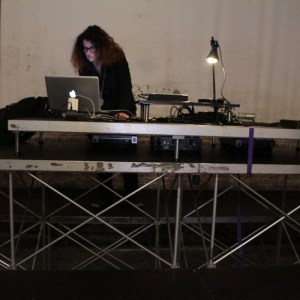

Following on from the previous posts I visited the Electric Spring 2015 site and discovered the music of Isnaj Dui
So, I began with thoughts of focussing on Experimental Electronic Music and like most went down the route of the standard history that everyone charts.
As some of you by now will realise, although I do post a lot about the well known electronic artists, genres and histories, I also try to give those well under the radar a space to get their music heard or the genre a wider audience. This includes trying to bring to attention the scene in the rest of the world.
I had heard about Hugh Davies and his catalogue of ‘alternative electronic history’ but until today had not had a chance to explore further. So glad I did !
As I knew in my heart, there was and still is an alternative electronic music scene and one where many artists are quietly creating music unknown or ignored.
This is why I am reblogging this article as part of the Experimental Season, as many of the themes are still so relevant today and why Hugh Davies’ work is still vital as a challenge to the traditional historical theory.
Listening to the Soundcloud discussion is recommended as it gives an insight into roles of Daphne Oram ad Delia Derbyshire in the development of British electronic music and technology. Some interesting questions and answers.Here is the original overview of the concert and presentation on Daphne Oram and Delia Derbyshire –
In February 2015, a concert of tape music works by Delia Derbyshire and Daphne Oram was staged as part of the Electric Spring Festival at University of Huddersfield. The concert was preceded by a public conversation between the curator of the concert, Dr James Mooney, and one of the festival’s artistic directors, Prof Monty Adkins. A complete recording of this pre-concert discussion is now available via SoundCloud: click here.

The conversation addressed the context of electronic music in Britain in the 1950s and 60s and included discussion of Hugh Davies, his self-built instruments and – in particular – his International Electronic Music Catalog. The tools and techniques of electronic music production in the 50s and 60s were discussed, as was the institutional context of the BBC Radiophonic Workshop, where both Derbyshire and Oram worked.
While simultaneously extolling the challenges and contingencies of archival research, Mooney and Adkins discussed the work of some of the key figures in British electronic…
View original post 265 more words
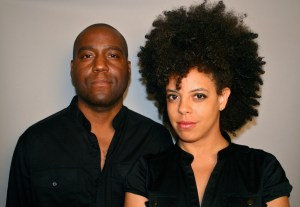
Here is the original piece which goes into detail about the theory and methodology behind the sound installations of Mendi and Keith Obadike.
SO! Amplifies: Mendi+Keith Obadike and Sounding Race in America.
Courtesy to SO! Amplifies for this article.
It’s Monday reblog time and here is a recent post from Sounding Out in celebration of World Listening Day 2015. I have been following the work of Mendi and Keith Obadike for some time as their art looks in detail at Race and Sound in America. I will repost the previous piece above from SO! Amplifies – recommended. Courtesy to Sounding Out for this post.
 For World Listening Day 2015, Sounding Out! is honored to debut Mendi + Keith Obadike’s new documentary video about their recent large-scale urban installation at The New School’s University Center in New York City, “Blues Speaker [for James Baldwin]” (April 2015), dedicated to writer and public intellectual James Baldwin (1924-1987). –JS
As Mendi + Keith describe, “For Baldwin sound, music, and the blues in particular were sources of inspiration. The multichannel sound art work meditates on a politics of listening found at the intersection of Baldwinʼs language and the sound worlds invoked in his work. It uses the glass façade of The New School’s University Center as delivery system for the sound, turning the building itself into a speaker. The 12-hour piece is created using slow moving harmonies, melodicized language from Baldwinʼs writings, ambient recordings from the streets of Harlem, and an inventory of sounds contained in Baldwin’s story…
View original post 291 more words
There is a good overview of the album here at Time Released Sound
If you go to Bandcamp there are many other releases including the first release Sleptis
Many thanks to Yeah I know it Sucks for leading me to Todays Discovery – p0stm0rtem
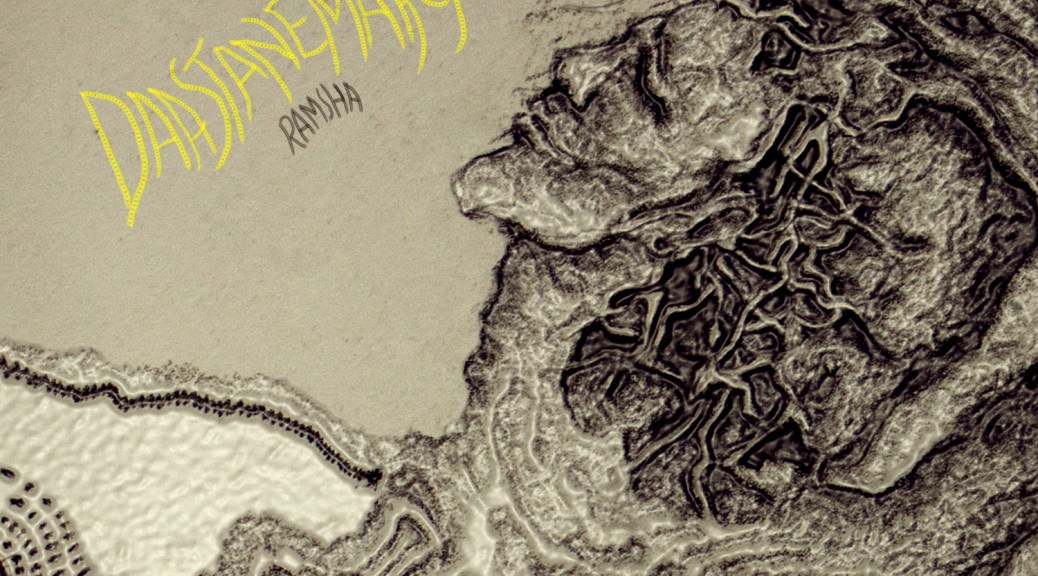
Here is the original article by AKSHATHASHETTY that led me to listen and discover the music of Ramsha Shakeel.
Courtesy to AKSHATHASHETTY for the reblog.

“My role as a musician is to sculpt harmonies out of sounds and vibrations which further the beauty of the cosmos. Music offers a subjective way of experiencing reality. From quarks, galaxies to the entire observable universe, everything is in motion. We have to develop an appreciation of the symphonic reality that we’re a part of. You know how sometimes we’re unable to ‘think straight’. I have come to realise that clarity of the mind forms only when you harmonise with your surroundings,” says Karachi-based Ramsha Shakeel, an experimental musician whose dabbles with macabre timbres and rhythmical depth has led to some incredible experiments within the drone and ambient world. Although the artiste’s musical journey is a synergistic collision of art, science and philosophy; it’s her metaphysical romance with the cosmos that perhaps best describes her tryst with music.
Like an ocean of formless waves, her sounds seem…
View original post 1,234 more words





 Feminatronic
You must be logged in to post a comment.