
Category Archives: Articles

Vectors of Vektroid and Vaporwave
If you are interested in finding out more about Ramona Andra Xavier aka Vektroid this is a great article.
Reblog – Feminatronic interview
Out of the blue, I was asked if I would talk about Feminatronic and a few thoughts on some very important issues. It ended up quite a long read (it could have been longer). It’s presented in the inimitable style of YIKIS but it’s turned out better than I hoped and it spreads the word : )
Thank you YIKIS for asking me to do this. Also, for supporting and highlighting some diverse and eclectic female artists on your site who I may never have come across and may never have been able to spotlight.

Perhaps you have heard of Feminatronic, a website that is worth to be bookmarked as your eyes and ears will be receiving an almost unstoppable stream of interesting artists, music, articles and documentaries. To make it even more special; they all happen to be female. It’s in fact a celebration to them who make electronic music of all sorts, and for a music consumer it is also a celebration as the diversity and quality will always set you to discover one new thing after another.
 ^ these childhood friends are discovering things
Some people might think but why only females? It’s a good and reasonable question perhaps as why not a mixed crowd of electronic music and sound artists of all kinds? I believe it has to do with that unfortunately there is tons of electronic artists out there, but it seems to be a very male dominated world…
View original post 4,138 more words

Article Reblog -Delia Derbyshire’s Dr Who: Feminism in Electronic Music ?

On the 3rd of July 2001, British composer of electronic music and musique concrète (a form of electroacustic music) Delia Derbyshire died in Northampton, England. Alongside Daphne Oram and Maddalena Fagandini, she was one of the key female figures in the development of electronic music in the twentieth century. In 1962, she joined the BBC […]
via Delia Derbyshire’s Dr Who: Feminism in Electronic Music? — A R T L▼R K
What a great discovery from ART LARK and some interesting thoughts here from Delia Derbyshire herself.
Web Focus – Sonic Environment Waves — MAKING WAVES

This month we’re delighted to have Dr. Leah Barclay, Co-Chair of Sonic Environments, and President of the Australian Forum for Acoustic Ecology , guest-curate this playlist: Sonic Environment Waves. About the playlist, Leah writes: This playlist features composers who are working in innovative ways with place, environmental sound and new technologies. It has been curated to […]
via Sonic Environment Waves — MAKING WAVES
Although not strictly electronic – “Making Waves is a monthly series of curated playlists streaming one hour of quality, new composed music. Founded in 2015, Making Waves shines a spotlight on the music of Australian composers. Fresh playlists are released on the first day of each month and older playlists are made available all year round via our archives; perfect for those with just a few minutes to explore one track or for hours perusing a myriad of diverse sound-worlds.”

Article Reblog -The Rare Recordings of Pauline Oliveros, Jerome Rothenberg and More — Bandcamp
New Wilderness Audiographics, a US-based label founded by 75-year-old composer/poet Charlie Morrow, hasn’t released music for over three decades, but the label has just unloaded digital versions of 40 rare, mostly unknown cassettes. Originally recorded and released in the 1970s and early ’80s, the astonishing collection features music by such luminaries as Pauline Oliveros, Phil Corner, […]
via The Rare Recordings of Pauline Oliveros, Jerome Rothenberg and More — Bandcamp Daily
Lots to read and listen to here, apart from Pauline Oliveros and check out the Bandcamp Daily too, as they post some rare, under the radar and interesting artists, genres and labels.
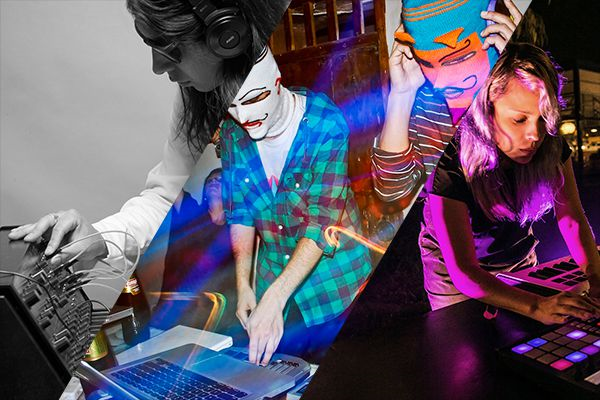
Reblog – The New Peruvian Electronic Renaissance — Bandcamp Daily

“We have not been an industrialized society. It’s been precarious, but that has spawned a very inventive and rich culture.” —Luis Alvarado Electronic music in Peru dates back to the 1960s, but you’d be forgiven for not knowing that until recently. The tropical bass boom has put the Andean nation on electronic music’s global map, and […]
via The New Peruvian Electronic Renaissance — Bandcamp Daily

Reblog – Visuals to sounds: the Oramics Machine
Here is another in the series Visuals to Sound from nnnoises.com

Nowadays lots of media artists, musicians and music software and hardware products are dedicated to translating visuals into sounds and vice versa. One of the pioneers in this area of “visual sound” was a British electronic composer called Daphne Oram. She was one of the founders of the famous BBC Radiophonic Workshop in 1958. But after hearing Poème électronique of Edgar Varese at the Brussels World’s Fair, she decided to leave the BBC and start her own electronic music studio a year later, the Oramics Studios for Electronic Composition. In this studio, she made one of the first synthesizers and quite likely the first audiovisual synthesizer in the beginning of the 1960s: the Oramics Machine.

With this (of course) analogue and largely mechanical machine, she drew shapes and waveforms onto a synchronised set of ten 35mm film strips which overlayed a series of photo-electric cells. These cells in…
View original post 137 more words
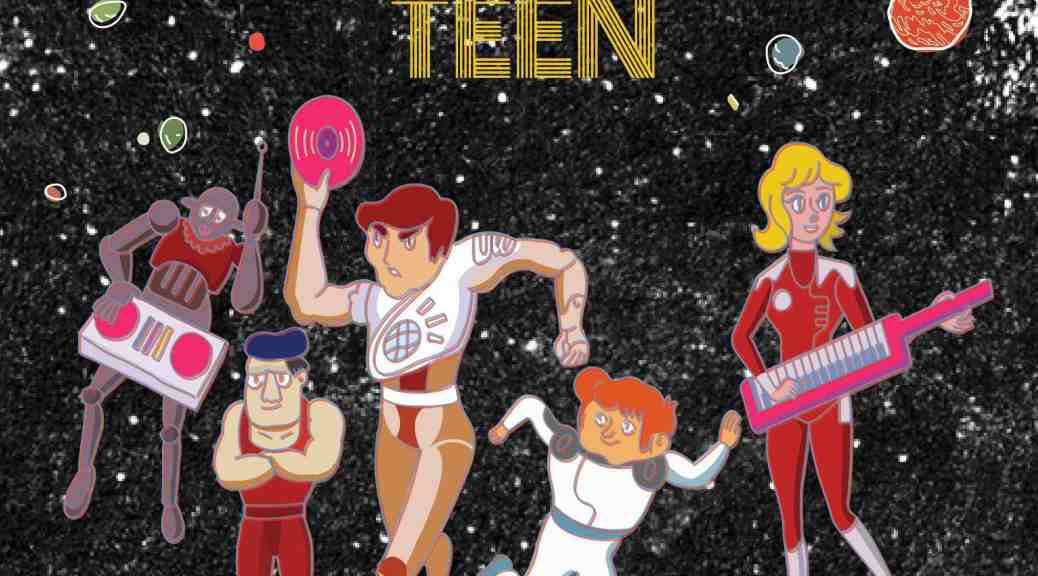
Morgane Lhote – not just the ex-keyboardist from Stereolab.

Morgane Lhote – In Conversation….
or
So much more than the ex –Stereolab keyboardist.
This is a new venture and came about quite by chance.
Morgane Lhote aka Hologram Teen, is releasing a 2-track single on 7″ vinyl via London’s Happy Robots Records (1/7/2016) and this was flagged up to me as something I would be interested in for Feminatronic. Liking what I heard, I posted a link and connected via Twitter. Out of the blue her Publicist ( Shauna McLarnon / Shameless Promotion PR) contacted me, along the lines –
SM – I saw that you just connected with Morgane Lhote (aka Hologram Teen) on Twitter. I’m her publicist and I was wondering if you might be interested in doing a feature on her or perhaps an interview of sorts?
F– Feminatronic is a one woman band so to speak, a journey of self-discovery and in doing so give a gentle push for electronic artists that I come across, that just happen to be women, from all parts of the world. Just want to reiterate, I am not a writer…
SM – That’s EXACTLY why I contacted you…
F – OK it’s a first for me but here goes…
Many will know Morgane Lhote as the keyboardist with Stereolab (1995 – 2001), a period that is considered one of the most creative and experimental. Some of their most famous albums were released at this time, such as Dots and Loops and Emperor Tomato Ketchup. But did you know that she was also in the band THE PROJECTS and Garden with James of Simian Mobile Disco. What about on the cover of Common’ album Electric Circus?
Now releasing under the moniker of Hologram Teen there’s more to this artist as I was privileged to find out.
You are originally from Paris (France) and I was wondering what musical memories and influences you had growing up? What lead you to the keyboard as an instrument?
Well, luckily my parents were really into music (not musicians). They bought me a turntable and some records when I was 4, so I would spend hours listening to “Breakfast in America” by Supertramp, the “Grease” Soundtrack, and “Emilie Jolie”, a trippy musical fairy-tale for children with some famous French musicians like Francoise Hardy. It gave me an early love for Prog-oriented pop and bizarre, whimsical soundtracks, which is pretty much my sound nowadays! My mum listens to Deerhoof and the Crystal Stilts nowadays!! I actually play a little bit of everything and learnt keyboards in order to join Stereolab!
What took you to London when you were in your 20’s?
I don’t especially like Paris, which is way too conservative for my tastes and wanted to start a band in London, where the music scene was a million times better. I learnt so much about music in London, the music scene in the 90s was so vivid. I remember seeing gigs almost every night at places like The Laurel Tree in Camden, where cool bands played, like Prolapse. Also music is a way of life in England; you either become a footballer or a musician. I discovered so many new bands scouring through record shop bins and talking to my friends
In 2002 you left and were in the band The Projects and then in Garden with James from Simian Mobile Disco. What differences were there as opposed to Stereolab, such as technological or music creation?
It was fun, less pressure, and also this is the band where I started writing my own parts and building up my confidence as a songwriter. We had much less of a budget and we wrote the songs when we jammed during rehearsals every week so it was more organic in that sense. I played in Garden when I was still in London and it was a folk band, almost like Fairport Convention! James from SMD played the drums, it was short lived but fun.
Stereolab were noted for use of vintage electronic keyboards combined with what’s coined as Motorik , lounge, 1960s pop and experimental pop music. What was that period like creatively? Have you retained your love of vintage keyboards?
Stereolab was a great learning experience but as I didn’t write any of the songs, I just soaked up all those musical influences and directions like a sponge.
I love vintage keyboards but they break all the time. That used to drive me crazy when we were on tour with Stereolab. I actually think some new analogue synths sound amazing and my next purchase is going to be a Prophet 12 by Dave Smith Instruments.
There have been many technological changes in music creation and production since 1990’s. I was wondering what have been the biggest changes for you?
The growing popularity of DAWs has enabled me to go solo and write all the different parts for one song such as drums, bass, guitar, and strings within the confines of one program. It has been incredibly helpful and liberating. Ableton in particular has really enabled me to launch my solo project and not have to depend on anybody else. Ableton Live 9 gives me an infinite amount of sounds which I can create and customize with synths such as Analog or Operator. I also use Simpler (a sampler) a whole lot.
Although there are sonic links to earlier bands you were in, there are some interesting developments. Listening to your early releases as Hologram Teen, there is a definite minimalist, harder retro feel, for example in tracks like Franmaster Glash or Quebecelectrique. However, since the release Post- Apocalypteacakes, there seems to be a much fuller, smoother sound.
It’s changed a lot in the last three years and it’s only recently that I found my “Sound”. I still oscillate between more dance tracks and horror movie soundtrack tunes. Motorik Disco was just a catchphrase a friend came up with to describe my sound. But I absolutely LOVE disco and I guess it would be a more minimal sort of disco with a bit of Prog and Krautrock thrown in for good measure! I write the songs and they are playful and tongue in cheek. I don’t take myself seriously and I hope this comes across in my music.
You seem to draw on many artistic areas such as Horror films, Disco, Hip Hop and Space music to name a few but music journalists like to categorize music into Genres for the prospective buyer. Does eclecticism make categorizing your sound difficult? Does this make for difficulties in getting your music heard by a wider audience?
I guess they matter, like you said, for marketing and descriptive values but nowadays so many bands and artists are not easy to categorize… Take LA Priest for example, is it electronic music, is it pop, is it dub? This is why my friend came up with the catchphrase Motorik Disco. It’s often easier to refer to my style of music as electronic for that reason. I love bands that are not easy to categorize like most of my older bands. And I love coming up with a mixture of band and artist names to describe to my friends what something might sound like. I mean I’m not expecting to sell any records so this does not really matter to me. Also I’m lucky in that I was in Stereolab so I definitely gain way more exposure from that also the fact that horror movie soundtracks are super popular at the moment.
When I listen to your tracks I hear melody as well as a good disco vibe (in a modern way, although I’m not against the old way either). I’ve found that if you write and record melodic instrumentals they are downgraded to easy listening and / or easy to create. Any thoughts on this?
That’s interesting! That was definitely the way back in the 1970s and 1980s with tracks such as “Popcorn” and “Pepper Box” but it is still the case nowadays? Electronic music and dance are hugely popular genres and so instrumentals are much more widely accepted I would say… and also taken seriously!
You now live in L.A that has a very strong American identity which is reflected in its music both via film and in such genres as Hip Hop and Rap and yet your music, for me, still has a strong European feel to it. Any influences from where you are situated or thoughts on this hybrid?
Thanks for noticing that. I guess you can take the girl out of Europe but not Europe out of the girl, lol. I can’t help it, I grew up with great French pop such as Serge Gainsbourg on the radio so that will always influence my sensibility. This is a great opportunity too as I can borrow musical feels from all the countries I’ve lived in: France, the UK, and the US.
Have you ever thought of collaborating with any artists?
Sure, it opens up the door to so many new musical ideas and takes you out of your comfort zone. It is so freeing. I really like Julia Holter at the moment; I’d love to work with her.
But I still collaborate with other people in the production and mixing stages. I really need another pair of ears in those stages after I’m done writing the song. This comes in the shape of my friend Richard Bennet, a musician from NYC, who owns a recording studio with his wife in Brooklyn. I’m actually going to NY in a month and we’re gonna play and write some tracks live in his studio.
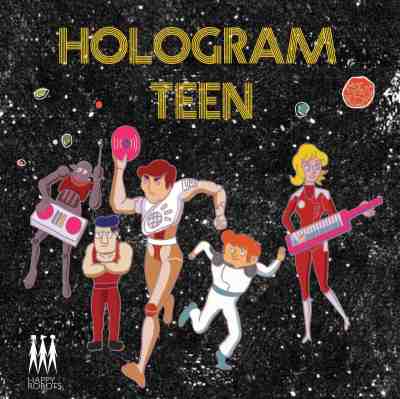
There seems to be a story around your most recent release – Where you talk about the backstory of the characters on the cover – Is this a mini concept EP or is Hologram Teen an overall concept?
The song has a futuristic vibe to it and it became clear to me that the story was set in space. The cover actually features alternate versions of the characters from “Kyaputen Fyūchā”, a Japanese animated TV series from the 1970s, which I grew up watching as a kid. France brought all the cheap animation from Japan so all the French kids born in the 70s grew up on a healthy diet of Japanese cartoons. It’s part of our cultural psyche!
The cover artwork on your releases are fun and quirky, quite pop arty or collage. Who does the Artwork? Do you have an input into the design or creation?
My friend from London, Alex Smith, who is a graphic designer does the Artwork. I usually send him some images that I like and he riffs from there. We’re both into weird, odd comics and art. The louder and the more inappropriate the better. We dare each other into really dark and weird areas and the results are always super fun. He came up with the idea of the devil in a pink bikini for the cover of the first single. Which I think was genius… We’re both gay and quirky and hopefully that shows in the cover artworks if that makes sense?


This seems to carry on into the promo photos of you as well. Is there an overall look you are going after?
Definitely, I would say I’m going for a loud, colourful and fun look. I’m going to have fun thinking of the next photoshoot theme!

You work at Disney Interactive testing video games. Does that mean you play games all day? (Ha-ha)
Yes and I love it!!
Have you ever wanted to write game music or even see the development of a Marsangst game?
I would totally write video game music. I was listening to the Final Fantasy X soundtrack earlier on and it’s so good. A Hologram Teen video game? Now, that’s an idea!
Really fascinated about how you came to be on the front cover of Electric Circus by Common. Apart from the nod to the Beatles’ Sgt Pepper, Common cited the people included on the cover were personal friends and family or people who had helped with the release.
I had no idea! Laetitia sang on the album but instead of just putting her on the cover, the designer put everybody from Stereolab on. It’s a great conversation starter and a good way to show off with your mates too.
I’d like to end by covering a couple of hot topics at the moment –
One of the biggest changes in the last ten years plus has been the rise of the Internet and Social media be it good or bad. What changes do you think have been positive / negative for you as an artist?
Personally, it’s been great. It’s so much easier to make your music accessible to people and make yourself more widely known. This would have been virtually impossible without the help of a record label in the 1990s.
There’s been an increasing move towards streaming and free downloads which some argue has had a very negative effect on music distribution, the way we listen and consume music and the overall devaluing of music as a creative art form.
I don’t think streaming music devalues music as a creative art form, on the contrary. 90% of my music collection nowadays is audio files. The way we consume music has changed with the times and sure, it’s still great to listen to vinyls, but think about how much more obscure music is available to us for downloading now!
There has been an increasing discussion of the lack of perceived visibility of certain groups of music creators/ producers in music as a whole. Comments made originally by Bjork have covered her experience of sexism in the arts, the undermining of her skills as an artist and producer by the media and recently calling music journalism a Boys Club. Again a huge subject that never seems to go away or better still be resolved.
Unfortunately, I agree, music is still totally is a boys club. I think it’s wonderful that blogs like yours highlight and promote the existence of women in music, especially electronic music. It’s very inspiring to me and we need to keep on fighting the good fight to show that women are technically and musically as able and talented as men.
How can we get more involvement of marginalised groups into technological fields or are there many out there, they’re just not visible? Maybe your experience is different?
In the Games World it’s the same boys club mentality problem… There actually a good number of women at Disney Interactive, which makes me feel a lot better. Now for game music, that’s another story. We just need to break the barrier I think. I think there are a fair amount of marginalised groups in technological fields (like at Disney Interactive) but I agree that they are still very underrepresented. It’s about education and learning opportunities for those groups, and I think slowly but surely that more resources are made available to them. I do believe that things are taking a turn for the better, from what I can see going on in the States.
Since, I’ve gone solo it’s only been positive. But believe me, I’ve had my fair share of idiots to deal with (in one previous band in particular) where men believed that women could not play instruments. It’s that sort of caveman mentality where the fragile male ego rejects any input from women in the “men only zone”. It’s so unnecessary and patriarchal and we need to keep this bullshit at bay. To be fair, the men I work with now couldn’t care less that I’m a woman; it just does not make any difference to them, which is very refreshing.
What do you hope for the future of Hologram Teen?
I’m currently working on an album, so I hope that it does relatively well… I would also really like to work on a film soundtrack, my music is quite cinematic and I’m a huge movie buff so I believe it would be a good match.
Thank you so much for taking the time to do this and I wish you well in future endeavours. I will be keeping an eye out for any tours to the UK.
Maybe we can eat popcorn and watch Suspiria?
Keep up with Hologram Teen
Facebook | Twitter | Mixcloud | Soundcloud
Keep up with Happy Robots Records
Website | Facebook | Twitter | YouTube | Soundcloud | Bandcamp
Keep up with Shameless Promotion PR
Website | Facebook | Twitter | Soundcloud

A taste of Norient
Here are a couple of articles that give some idea of the breadth of subject matter on Norient.

“Feminism is equality where you are not judged by the color of your skin, your social class, sexuality, age, religion, gender, or whether you have a disability or not.” Queer feminist Swedish rapper Silvana Imam questions privileges and fights for a global feminist movement.”
Queer feminist Swedish rapper Silvana Imam questions privileges and fights for a global feminist movement. However, the interview shows that her protest is not made out of empty slogans, but out of strong beliefs. From the Norient book «Seismographic Sounds» (see and order here).

In Botswana, heavy metal is a source of female empowerment. Philipp Rhensius talked with South African photographer Paul Shiakallis about obstacles and chances of representing strong womanhood in a patriachal society.

Despite being one of the first female Iranian rappers, Salome MC has no interest in perpetuating the current state of the music business. To her, it is about letting the music speak for itself. A portrait on one of the artists who collaborated on the first season of “1+1 – Worldwide Recording Project.”
Read the full article on Norient.com:
http://norient.com/stories/salome-mc-a-quiet-storm/…
 Feminatronic
You must be logged in to post a comment.