Category Archives: Recommends

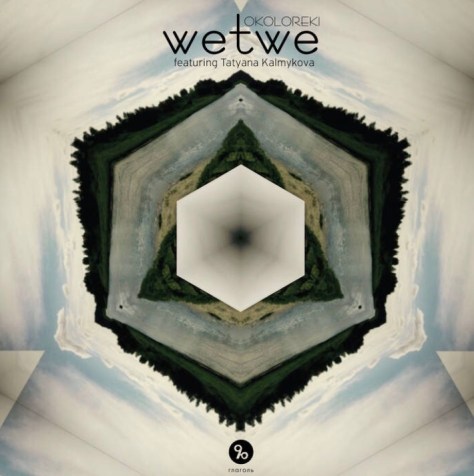
Review Reblog – Wetwe Feat. Tatyana Kalmykova – Okoloreki

It’s been a strange few weeks and I haven’t been able to keep up with things here but I’m kicking myself that I missed this…It is a wondrous thing to listen to…

kainobuko's avatarYeah I Know It Sucks

Artist: Wetwe Feat. Tatyana Kalmykova
Title: Okoloreki
Keywords: electronic experimental abstract ambient bass music downtempo drone folk modern classical russian folklor techno Moscow

I don’t know much about this music as I evidently avoided all the information that came with it as it appeared through our illustrious request form, but from my own ears and mind I could make up that this was a bit of a holistic revelation in sound ways. It was a calming one, that featured the prominent voice of a certain Tatyana Kalmykova that seemed to sing among the walls of ruins, or perhaps a still standing church with great acoustics. Sometimes her voice gets bounced into a room in which it still feels warm, yet the acoustics feel flat, a bit as if the bigness gets suddenly beamed through some old time radio.

But it’s not all about Tatyana Kalmykova’s voice, it’s also pretty much…

View original post 430 more words

Article Reblog – Out of Sync: Gendered Location Sound Work in Bollywood

Sounding Out! is a definite recommend from me. It never ceases to amaze me how long term issues such as gender and class, amongst others, are covered in engaging, intelligent and interesting ways and this series is a welcome addition to their huge collection of writings, articles and ‘food for thought’.

pjaikumar's avatarSounding Out!

co-edited by Praseeda Gopinath and Monika Mehta

Our listening practices are discursively constructed. In the sonic landscape of India, in particular, the way in which we listen and what we hear are often normative, produced within hegemonic discourses of gender, class, caste, region, and sexuality. . . This forum, Gendered Soundscapes of India, offers snapshots of sound at sites of trans/national production, marketing, filmic and musical texts. Complementing these posts, the accompanying photographs offer glimpses of gendered community formation, homosociality, the pervasiveness of sound technology in India, and the discordant stratified soundscapes of the city. This series opens up for us the question of other contexts in India where sound, gender, and technology might intersect, but, more broadly, it demands that we consider how sound exists differently in Pakistan, Sri Lanka, the Maldives, Bangladesh, Bhutan, Nepal, and Afghanistan. How might we imagine a sonic framework and South Asia from these…

View original post 2,087 more words

Review Reblog – Izabela Dłużyk ~ Soundscapes of spring — A Closer Listen

Izabela Dłużyk’s Soundscapes of summer was A Closer Listen‘s favorite soundscape of 2016, and her latest album is just as remarkable. For this release, the artist has turned the dial back to spring, and we’re hoping (reasonably so) that the project will eventually become a quadriptych. The sounds here are as clear as any we’ve ever heard; […]

via Izabela Dłużyk ~ Soundscapes of spring — a closer listen


A thing of beauty is a joy forever….


ICYMI – Moor Mother – Fetish Bones

There is nothing to say as introduction…..Just listen.


Some Weekend Reading……

Pioneering Italian Women in Electronic Music

September 15, 2017
By Johann Merrich


maddalena fagandini

Radiophonic Ladies by Jo Hutton on Sonic Arts Network


Pioneering Canadian Women In Electronic Music

September 29, 2016
By Robyn Fadden


Early Electronic Music in Québec: A Brief History

October 4, 2016
By Roger Tellier Craig


Review Reblog – On the reissue of Maggi Payne’s Crystal by Aguirre — The Hum Blog


“For decades, Maggi Payne has quietly lingered in the realms of avant-garde and experiential music, laying influence just out of view.” 

via on the reissue of maggi payne’s crystal by aguirre — The Hum Blog


Reblog – The Transcendent Sound of Dustin Wong and Takako Minekawa

Joyous creativity when I listen to this release : )

Reblog – Re-orienting Sound Studies’ Aural Fixation: Christine Sun Kim’s “Subjective Loudness”


Recommended reading and challenging the idea that listening is just with the ear, it does demand use of all senses.

smayberryscott's avatarSounding Out!

Editors’ note: As an interdisciplinary field, sound studies is unique in its scope—under its purview we find the science of acoustics, cultural representation through the auditory, and, to perhaps mis-paraphrase Donna Haraway, emergent ontologies. Not only are we able to see how sound impacts the physical world, but how that impact plays out in bodies and cultural tropes. Most importantly, we are able to imagine new ways of describing, adapting, and revising the aural into aspirant, liberatory ontologies. The essays in this series all aim to push what we know a bit, to question our own knowledges and see where we might be headed. In this series, co-edited by Airek Beauchamp and Jennifer Stoever you will find new takes on sound and embodiment, cultural expression, and what it means to hear. –AB
A stage full of opera performers stands, silent, looking eager and exhilarated, matching their expressions to the…

View original post 2,333 more words

Reblog – a meeting of remarkable minds, a live radio discussion between annea lockwood and pauline oliveros from december 1972

Today’s Discovery – Tribute to Pauline Oliveros

Latin American electronic / electroacoustic artists tribute and creative responses to, the writings and thoughts of Pauline Oliveros.

On September 13, 1970, a young composer named Pauline Oliveros (1932-2016) published in The New York Times an article entitled “And Don’t Call Them ‘Lady’ Composers”, Ms. Oliveros addressed an unasked yet (tellingly so) critical question: “Why have there been no ‘great’ women composers?” Her argument is guided by a questioning of critical, historiographic and technical discourse. Oliveros explained how the cult of innovation constructs figures of “greatness,” and to what extent society promotes the virilisation of these discursive models…..

Read more of the background to this project, curated by Susan Campos-Fonseca here