All posts by Feminatronic

I am an electronic musician who, as someone recently said to me, set up Feminatronic to act as "soft PR" for female electronic artists from all genres and styles. If I can give a little helping hand then why not?

Katie Gately / Tlaotlon ~ Split

postrockcafe's avatara closer listen

7006Fatcat’s split series has been ongoing since 1997, and after this 12″ is released, only one will remain.  The series predates the digital age and has managed to last into the vinyl resurgence.  Previous installments have featured Third Eye Foundation, Fennesz and Kemialliset Ystävät, proof of the label’s dynamic choices.  Katie Gately and Tlaotlon continue in this tradition, offering sounds that are simultaneously fresh and mysterious.

Katie Gately was last heard on a 7″ split lathe cut from FET Press, who brought us the stellar Line Drawings not too long ago.  On “FAR”, Gately’s experiments in voice lead her to strange places: echoes, doublings, stutters, drones.  Prior to this, and more widely circulated, came a self-titled mini-album on Public Information and a critically acclaimed cassette on Blue Tapes.  These stunning salvos were declarations of a major new artist, straddling the fields of experimentation and electronics, doing the sort of…

View original post 437 more words

FEMINATRONIC YOUTUBE PLAYLIST #9

On this playlist are:

Joan Le Barbara

Julia Holter

Celestial View

Lesley Flannigan

Maddalena Fagandini

Sabine Klare

Tujiko Noriko

Deeplistening Band

<

YOUTUBE FEATURED CHANNEL – MATZUMI

The latest playlist on Soundcloud #30 includes tracks from artists who create Melodic Instrumental music and Matzumi is one of the biggest names in this genre of electronic music.

Matzumi

MATZUMI

One woman – one project ! New Age, Ambient and Soundtracks.

* CALL FOR SUBMISSIONS *

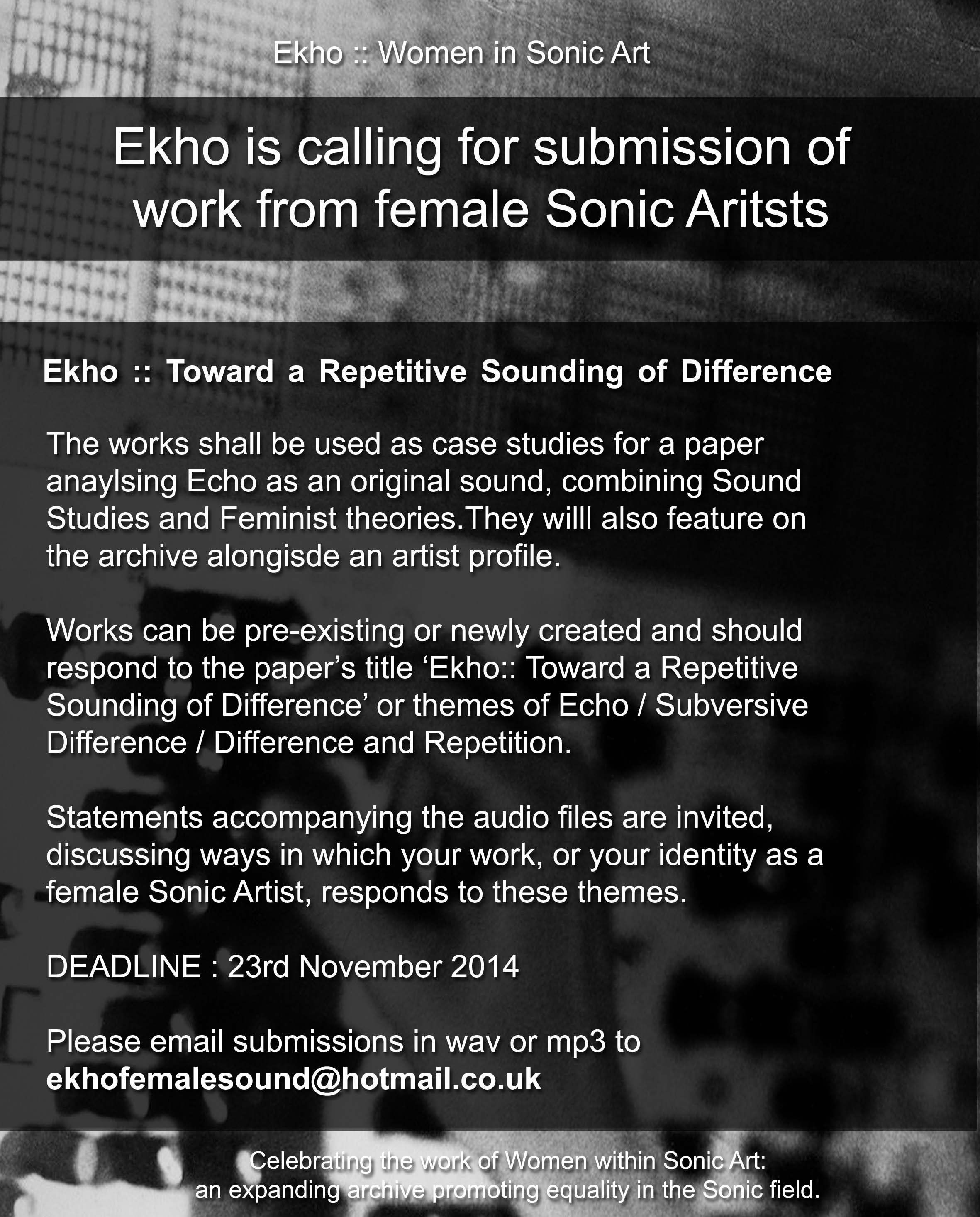
Ekho's avatar:::::::::::: Ekho :::::::::::: Women in Sonic Art

Calling for submission of work from female Sonic Artists for a paper entitled ‘Ekho :: Toward a Repetitive Sounding of Difference’. The paper will be analysing Echo as an original sound, combining Sound Studies and Feminist theories. All works will be included in the archive alongside an artist profile.

We are particularly interested in hearing from artists working in areas of drone, minimalism, field recording, sound spatialisation and noise – but welcome any submissions. Supporting statements are encouraged discussing the ways in which your work, or your identity as a female Sonic Artist, responds to the themes of Echo / Subversive Difference / Difference and Repetition.

Please see below or email for further details.

DEADLINE :: 23rd Nov [/Submissions before this date are appreciated]

Submissions and questions to :: ekhofemalesound@hotmail.co.uk
ekho submission final

View original post

MIRA KATHARINA LANGNAU – AYANDA

Starbell AVM Website

Sounds of Science: The Mystique of Sonification

schedel's avatarSounding Out!

Hearing the Unheard IIWelcome to the final installment of Hearing the UnHeardSounding Out‘s series on what we don’t hear and how this unheard world affects us. The series started out with my post on hearing, large and small, continued with a piece by China Blue on the sounds of catastrophic impacts, and Milton Garcés piece on the infrasonic world of volcanoes. To cap it all off, we introduce The Sounds of Science by professor, cellist and interactive media expert, Margaret Schedel.

Dr. Schedel is an Associate Professor of Composition and Computer Music at Stony Brook University. Through her work, she explores the relatively new field of Data Sonification, generating new ways to perceive and interact with information through the use of sound. While everyone is familiar with informatics, graphs and images used to convey complex information, her work explores how we can expand our understanding of even…

View original post 2,186 more words

Working Against the Silencing of Female Sound Artists: Wikipedia Editing

SO! Amplifies: Mendi+Keith Obadike and Sounding Race in America

guestlistener's avatarSounding Out!

Document3SO! Amplifies. . .a highly-curated, rolling mini-post series by which we editors hip you to cultural makers and organizations doing work we really really dig.  You’re welcome!

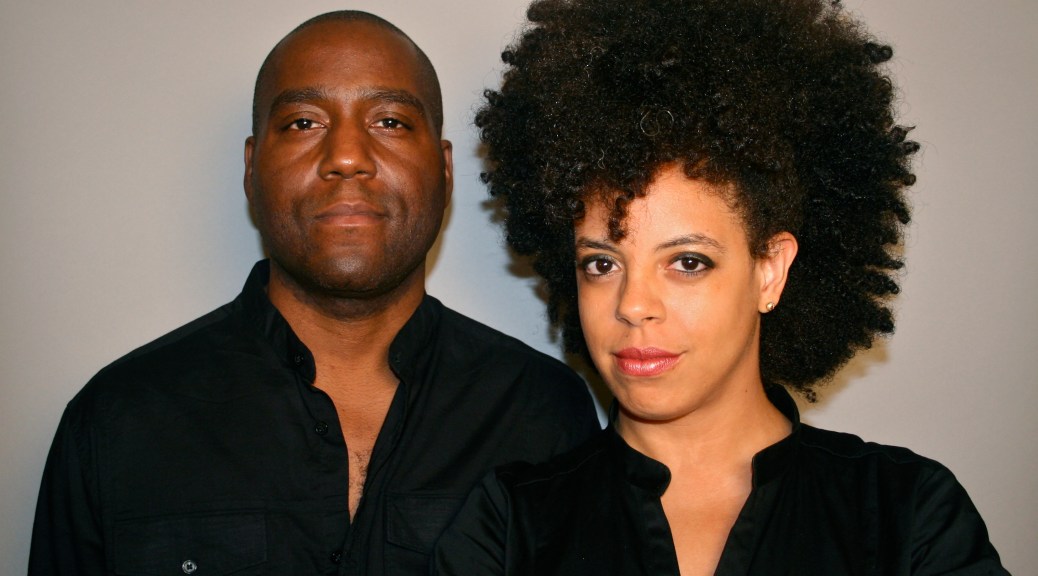
Several years ago—after working on media art, myths, songs about invisible networks and imaginary places—we started a series of sound art projects about America. In making these public sound artworks about our country we ask ourselves questions about funk, austerity, debt and responsibility, aesthetics, and inheritance. We also attempt to reckon with data, that which orders so much of our lives with its presence or absence.

We are interested in how data might be understood differently once sonified or made musical. We want to explore what kinds of codes are embedded in the architecture of American culture.

Big House/Disclosure

image02

The first sound art project in this vein that we completed in 2007 was entitled Big House / Disclosure. Northwestern University commissioned

View original post 883 more words

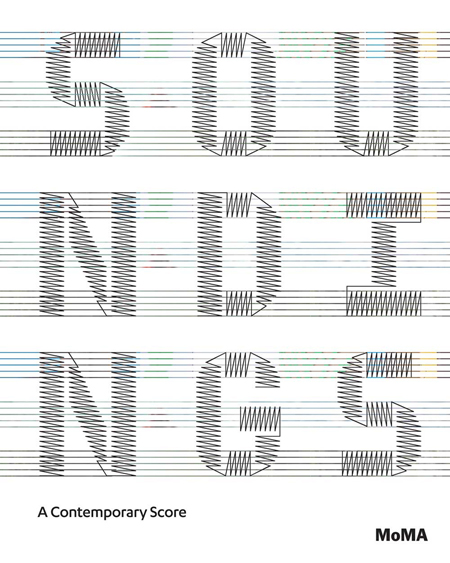
MoMA’s “Soundings” exhibition: critiquing the critics

Interesting thoughts contained within this piece.

soundslikenoise's avatarSOUNDS LIKE NOISE

soundingsSoundings” is MoMA’s first exhibition dedicated solely to “sound art”. It features installations by 16 contemporary artists working with sound – these include notables such as Susan Philipsz (Scotland), Stephen Vitiello (America), Richard Garet (Uruguay), Marco Fusinato (Australia).

Recent reviews for “Soundings” have revealed some interesting attitudes held by critics towards the discipline of “sound art”. As each review contains common reactions to the show some general conclusions can be drawn about the type of sound-art critics prefer:

1. Installations using recognisable sounds or familiar melodic structures are received favourably.

2. Installations that utilise abstracted or dissonant sounds are received unfavourably.

Installations featuring voice, strings, and field recordings fared well in the reviews, these sounds being melodic or familiar to the listener. Thus, for sound art to be “successful”, must the audience recognise the source of the sounding object, or do the reviews merely reflect a conservatism…

View original post 648 more words