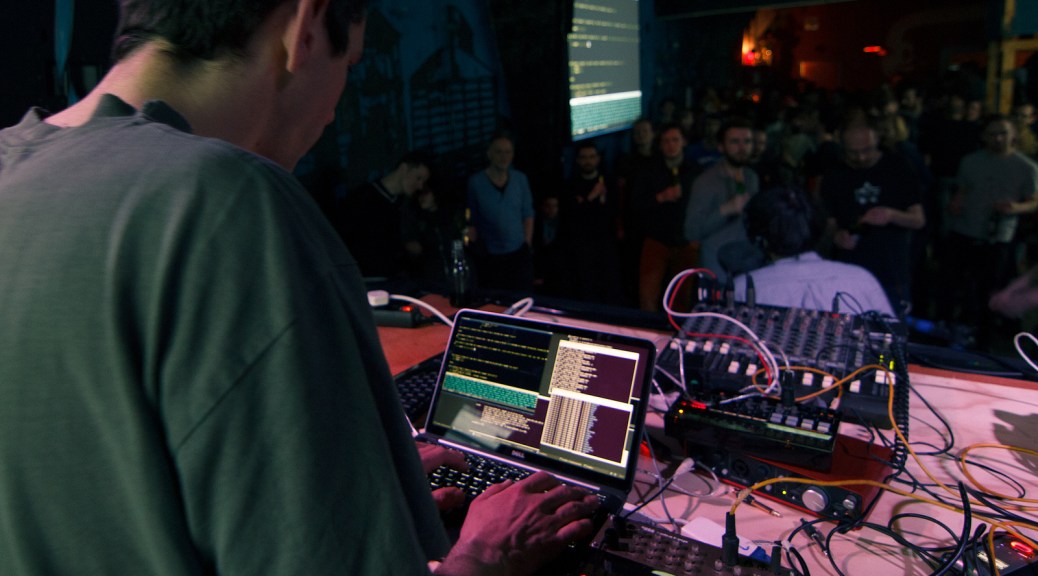
Check out Shelley Knotts and her Live Coding music.
Alex McLean on Live Coding and Algorave
Check out Shelley Knotts and her Live Coding music.

Check out Shelley Knotts and her Live Coding music.
 Once one gets past the name of the duo, a moniker that defies spell checking, one is freed to enjoy the music: in this case, a haunted house tape based on a detective’s personal journals. Coffin bells ring, specters glide through the house, and around every sonic corner lies a trap or at the very least, a clue. Can the mystery be solved? Can the detective be saved? Was there ever a detective in the first place, or is this all part of an elaborate scheme to lure new victims inside?
One thing is clear: April Larson and Matt Bower are having great fun with this production. With the “new” popularity of podcasts and the near-complete failure of recent horror movies to unsettle (“Woman in Black 2”, we’re talking to you), it may be time to visit the sonic world for chills and thrills. Try reading Poe to this; the…
View original post 284 more words
 Editor’s Note: Welcome to Sounding Out!‘s annual February forum! This month, we’re wondering: what ideas regarding gender and sound do voices call forth? To think through this question, we’ve recruited several great writers who will be covering different aspects of gender and sound. Regular writer Regina Bradley will look at how music is gendered in Shonda Rhimes’ hit show Scandal.A.O. Roberts will discuss synthesized voices and gender. Art Blake will share with us his reflections on how his experience shifting his voice from feminine to masculine as a transgender man intersects with his work on John Cage. Robin James will return to SO! with an analysis of how ideas of what women should sound like have roots in Greek philosophy. Me? I’ll share a personal essay/analysis of what it means to be called a “loud woman.”
Today we start our February forum on gender and sound with Christine…
View original post 2,197 more words
Another great discovery care of Fractured Air.
Interview with We Like We.
“How many times does life actually evolve as anticipated? There is something extremely beautiful about these processes and transformations.”
—Katinka Fogh Vindelev
Words: Mark Carry
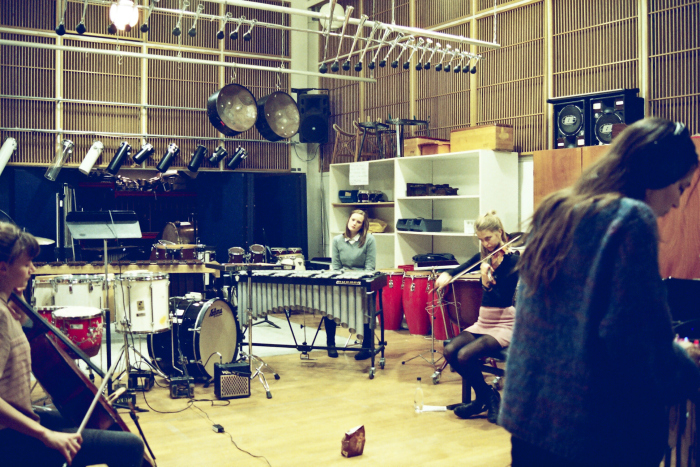
We like We is an experimental performance and sound quartet based in Copenhagen, Denmark. Encompassing worlds of neo-classical, experimental pop and avant-garde soundscapes, the highly promising and gifted quartet comprises of Katrine Grarup Elbo (violin) Josefine Opsahl (cello) Sara Nigard Rosendal (percussion) and Katinka Fogh Vindelev (voice). All four members are classically trained, but each share a desire for exploring, experimenting, jamming and shaping a sound of their own.
Expanding their inspiration and influence from the classical roots We like We makes music driven by intuition and playfulness. I feel a lovely parallel exists between the Danish quartet’s highly-evocative and intuitive compositions and Iceland’s Amiina such is the unwavering beauty and utter magic the masterful musicians create with each sacred…
View original post 2,250 more words
I am currently putting some sort of order into a large number of audio files connected with a documentary project I am working on, so I thought it might be interesting to share a few of my own work tips on this particular process. Whether you are working towards a written piece or an audio programme, I hope these will come in handy.
So what is logging? This consists of transcribing a recorded audio interview (in my case writing it into a Word doc). Although this might strike most people as tedious or even superfluous, it is in fact a fundamental step in the process as it will provide you with a ‘blueprint’ that will help shape the editing process (and by extension the finished project) – as well as being a lifesaver at a later stage when rooting through any material you have archived. Another essential area this is going to come in handy for, is working…
View original post 674 more words
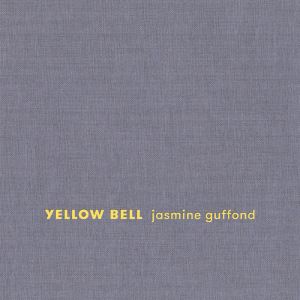 Formerly known as Jasmina Maschina and Minit, Jasmine Guffond comes to this ball under her own name. While her music has been (fairly) compared to that of Grouper, her work is primarily instrumental; impressions are formed by sound, rather than lyric.
One amusing exception appears in the center of track two, as Guffond sings about an elephant in her room; yet we’re at a loss to name it. This curiosity underlines the compelling nature of Guffond’s work, which retreats the more it is played. Each signal hides another signal, each layer another layer. This elusive quality draws the listener in like the frost giant’s daughter. Danger may lurk, yet the listener is blissfully unaware.
The first such segment is found in the waning minutes of the title track: a whispery drone that descends into a whorl of conversation-masking fog. But the track doesn’t start that way; it begins with…
View original post 208 more words
Thanks to ACL for the insightful reviews that I have reposted. A must visit site for those wishing to broaden their listening horizons.
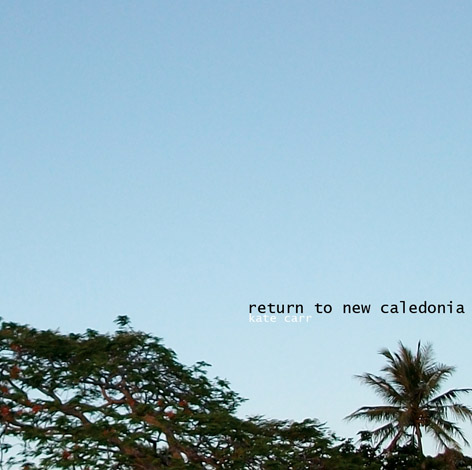
 Return to New Caledonia is an EP about remembrance, even if the remembrance is skewed; flashes of insight mingled with déjà vu. The music itself is a return, a reinterpretation of things heard on holiday: a return of the mind and the heart, a translation of the real to the impression. Is this exactly what it sounded like to be there? No. Is it true to the mind’s eye? Only Kate Carr knows for sure, but one would hazard that the answer is yes.
The field recordings and lighter sounds provide the highlights: the reef fish (who sound somewhat like frogs and woodpeckers) on “La piscine naturelle” mix well with the trickle of water and the occasional shh-shh of a shaker. A soft synth surfaces slowly in the background, then sinks to the depths. A dominant drum noise is the only distraction; as the sound of least interest, it would…
View original post 195 more words
Included in the APEX Exhibition – Footnotes – now on and highlighted in an earlier post. Details at apexart.org.
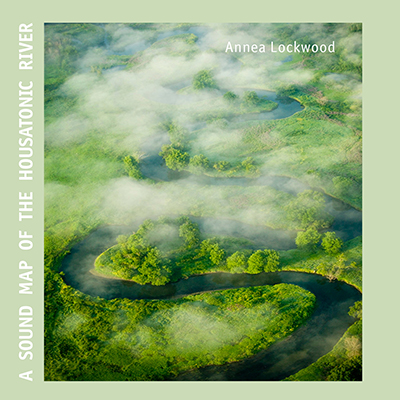
 A certain irony rests in the fact that I’m listening to the work of a New Zealand artist who traveled across the sea to record the sounds of a river near the home where I was raised. Even as a child in Connecticut, I used to love spending time by the riverbank, listening to the sounds of running water, the plopping of frogs, the twittering of birds and the rustling of the wind in the wheat around me. Knowing that this is the same river lends listening a strange nostalgia; we never cross the same river twice, but thanks to Annea Lockwood, we can listen to it multiple times.
A Sound Map of the Housatonic River began as a quadraphonic installation and has recently become Lockwood’s third river study to be released for public enjoyment. A real map is enclosed so that listeners can trace her path – and…
View original post 276 more words
Thank you to Ekho, Women in Sonic Art for this profile.

 Christina Kubisch is a German composer and sound-installation artist. She is a Professor of Audio-Visual Arts at the academy of Fine Arts, Saarbrücken and has had international solo exhibitions since the seventies as well as numerous releases with various labels.
Below – ‘Ocigam Trazom’ from Mono Fluido (Important Records 2011), Constructed using field recordings, tape, flute and custom EMS synthesizer.
Thanks to Ear Room for this interview.
Hildegard Westerkamp is a composer, radio artist and sound ecologist.
She is a pioneering figure within the field of soundscape studies and sound ecology and an integral member of the World Soundscape Project. She presents soundscape workshops, performs, writes and lectures internationally. For comprehensive information please visit http://www.sfu.ca/~westerka/index.html
………………
ER. Can you talk about the origins of the Vancouver Soundscape Project – how it came about, and your own involvement.
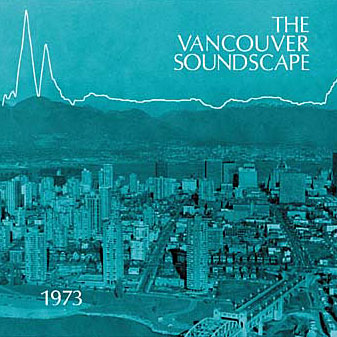
HW. The World Soundcape Project (WSP) was a research project, initiated by Canadian composer R. Murray Schafer at Simon Fraser University in the late 60s and remained under his direction until the late seventies. When I joined the project in 1973, the group (then consisting of R. Murray Schafer, Barry Truax, Peter Huse, Howard Broomfield, Bruce Davies and myself) were working on the document entitled The Vancouver Soundscape, published shortly after as 2 LPs and a book. It was…
View original post 2,323 more words





 Feminatronic
You must be logged in to post a comment.